Dichrorampha senectana
Checklist Number49.317 [B&F: 1277]
Verification
Record requires retention of specimen until confirmed, and may require dissection. Consult with CMR if unsure
Classification
| Family: | Tortricidae |
| Subfamily: | Olethreutinae |
| Genus: | Dichrorampha |
| Species: | senectana |
| Authority: | Guenèe, 1845 |
Scarce in scrub and cliffs in parts of England and Wales. On the Isle of Wight, stated to be locally common along the foot of the downs at Ventnor in 1880, this species has not been reported since from anywhere on the Island nor in Hampshire. Wingspan 12-16 mm. The comparatively uniform, densely irrorate forewing, which lacks distinct fasciate markings, and the very dark grey or blackish grey apices of the cilia distinguish this species from D. plumbagana [Bradley]. Within the Dichrorampha genus, several species lack a clear, contrasting dorsal wing blotch. D. senectana is generally a plain, drab brown-grey moth. It lacks the distinct fasciate markings other genus members and is very similar to the far more common Dichrorampha plumbagana. The only supposed external diagnostic trait is a slightly darker grey tip to the wing cilia in completely pristine, fresh specimens of senectana—a detail that easily rubs off and is virtually impossible to rely on in a typical macro photograph.
Larva feeds within roots of Ox-eye Daisy, Feverfew and Tansy.
Larva feeds within roots of Ox-eye Daisy, Feverfew and Tansy.
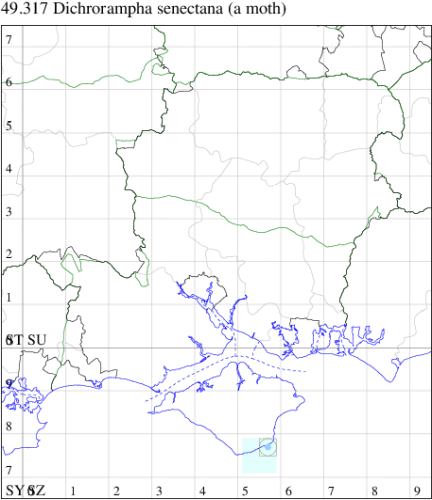
VC10 Isle of Wight
| Site | Date | Quantity | Recorder | Stage |
|---|---|---|---|---|
| Ventnor (SZ57) | 1880 | - | South | Adult |